
LSU Geologists Lead at International Tourmaline Conference in Madagascar
March 17, 2026
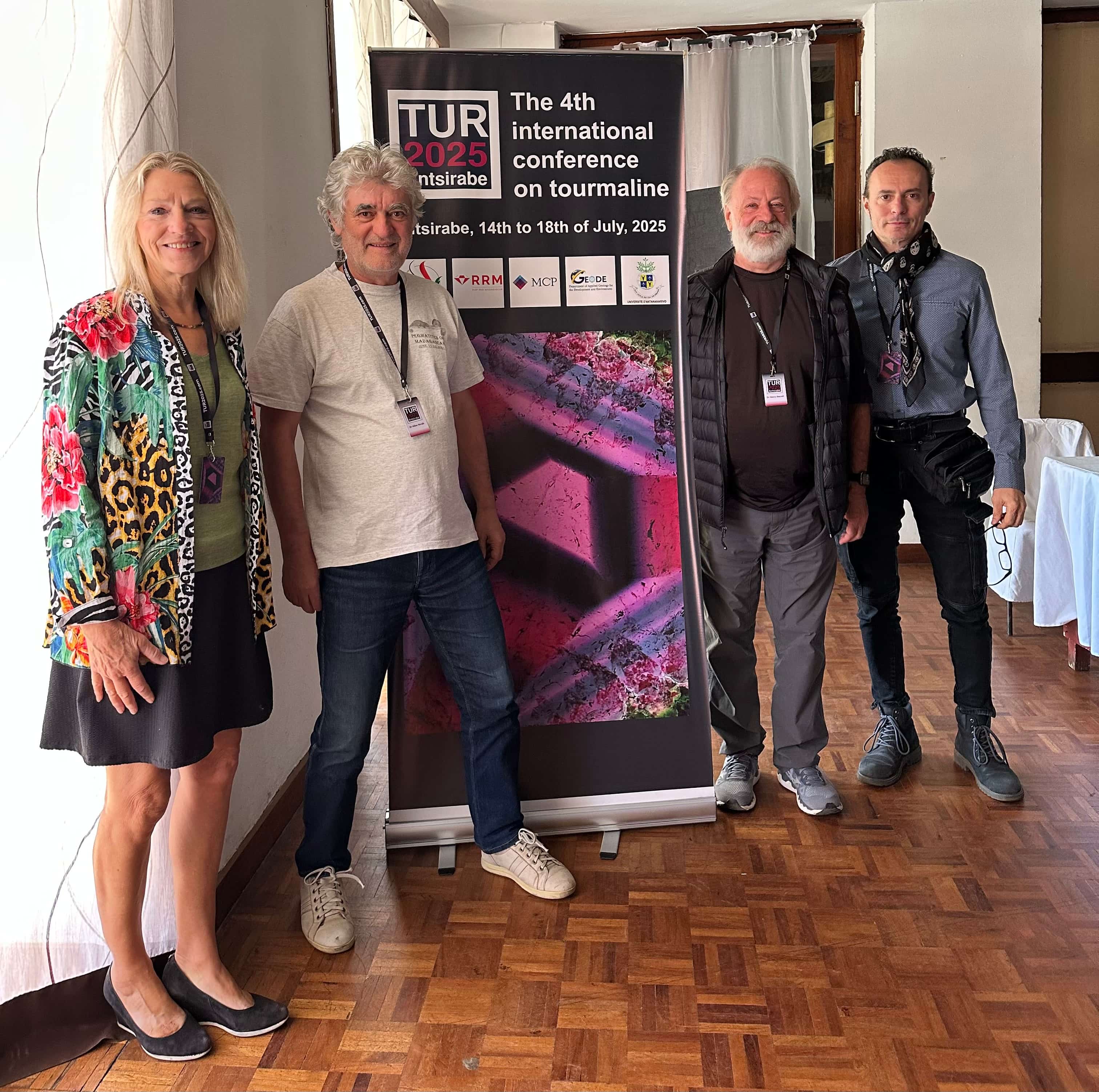
Attendees of the four previous tourmaline conferences: Dutrow, LSU; Novak, Czech Republic; Henry, LSU; and Pezzotta, Italy, at the Tur2025 conference.
Two faculty members from LSU’s Department of Geology and Geophysics played key leadership roles at the Fourth International Conference on Tourmaline, known as TUR2025, held July 18-23 in Antsirabe and surrounding regions of Madagascar, one of the world’s premier sources of gem-quality tourmaline.
Dr. Barbara Dutrow and Dr. Darrell J. Henry represented LSU at the international conference, which brought together 41 participants from 11 countries, along with Malagasy scientists, government officials, faculty and students. The five-day event featured scientific presentations, field excursions and collaborative discussions focused on advances in tourmaline research. The conference was hosted by Dr. Federico Pezzotta of Italy and an international organizing team.
LSU Faculty Leadership
Dutrow and Henry served on the Scientific Organizing Committee, highlighting LSU’s leadership in mineralogy and geochemistry at the global level.
Henry, Campanile Charities Professor of Geology and chair of LSU’s Department of Geology and Geophysics, delivered a keynote address on the evolving science of tourmaline. Dutrow, Gerald Cire & Lena Grand Williams Alumni Professor and a longtime leader in mineral sciences research and education, was an invited speaker and shared her expertise on 2.8-billion-year-old tourmalines and their isotopic composition, which record early Earth evolution.
Dutrow and Henry are among only four scientists worldwide, along with Milan Novák of the Czech Republic and Federico Pezzotta, who have participated in every Tourmaline Conference since its inception in 1997. Their continued involvement reflects more than three decades of sustained impact in the field.
Field-Based Science in Madagascar
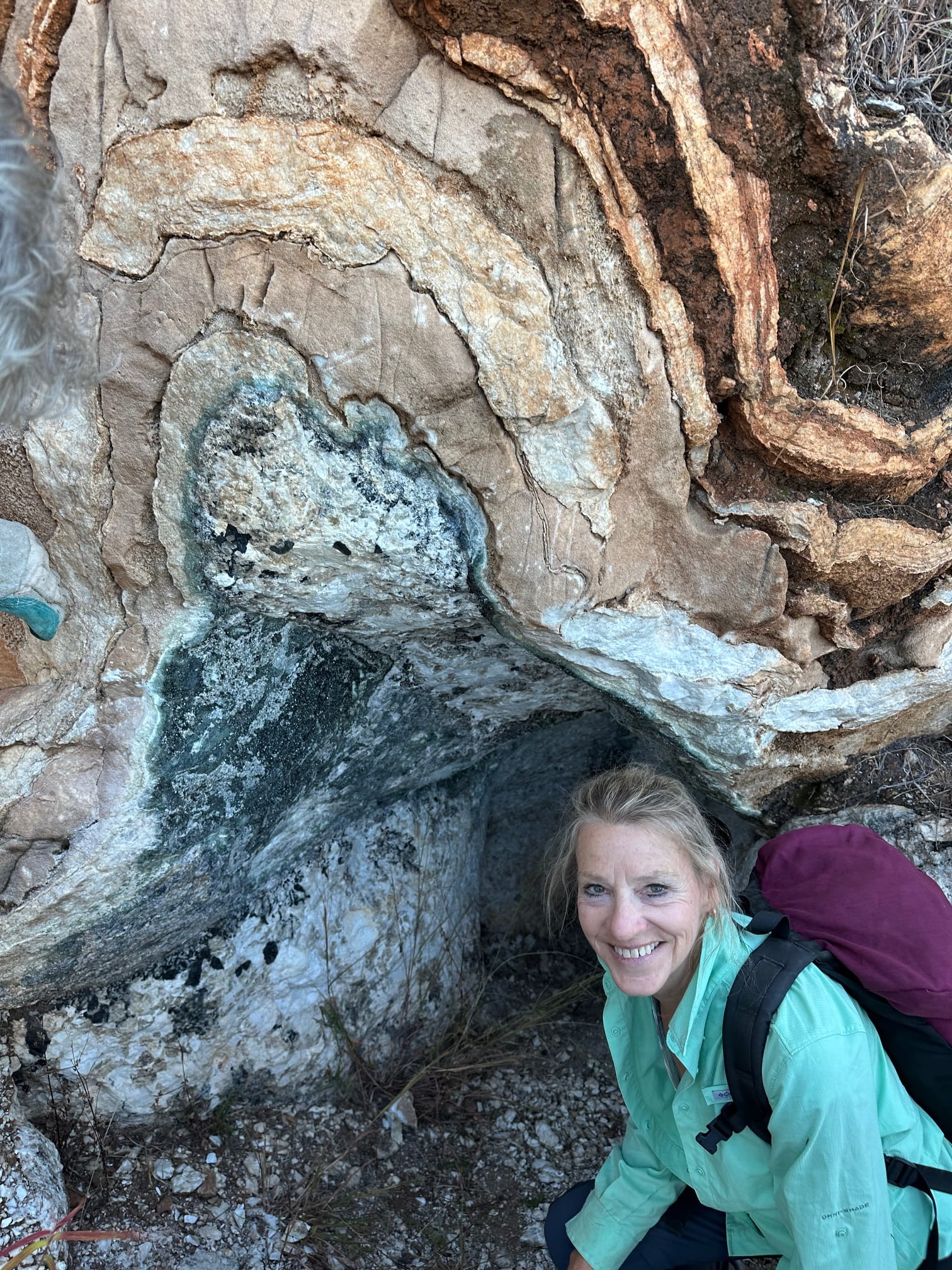
Dr. Dutrow in central Madagascar, by the Tsiribihina River, with hills consisting of granites.
A major component of TUR2025 was field excursions to classic tourmaline-bearing pegmatites in Madagascar’s central and southern Sahatany Valley. Participants visited remote mining localities known for multicolored elbaitic and liddicoatitic tourmaline, along with associated rare minerals including amazonite, apatite, danburite and morganite.
The region was first recognized as a premier mineral locality by French scientists in the late 1800s and remains one of the most important sites for studying tourmaline in its natural geologic context. Dutrow said visiting and collecting specimens from these iconic localities, many of which are rarely seen by Western scientists, was a once-in-a-lifetime experience and a highlight of the conference.
The excursions reinforced conference themes by linking advanced analytical, chemical and isotopic research with real-world geologic settings, an approach long emphasized by LSU faculty in both teaching and research.
Outreach and International Engagement
LSU faculty also focused on academic outreach and global partnerships. Dutrow and Henry brought LSU Geology and Geophysics backpacks, which were distributed to undergraduate and graduate students in the geology department at the University of Antananarivo who joined the conference. Students used the backpacks during the extended field excursion as a practical show of support for international geoscience outreach and education.
Dutrow also donated a copy of her mineral sciences textbook to the chair and a professor in the Department of Applied Geology for Development and Environment at the University of Antananarivo, further strengthening connections between LSU and Malagasy geoscience programs.
Continuing a Scientific Legacy
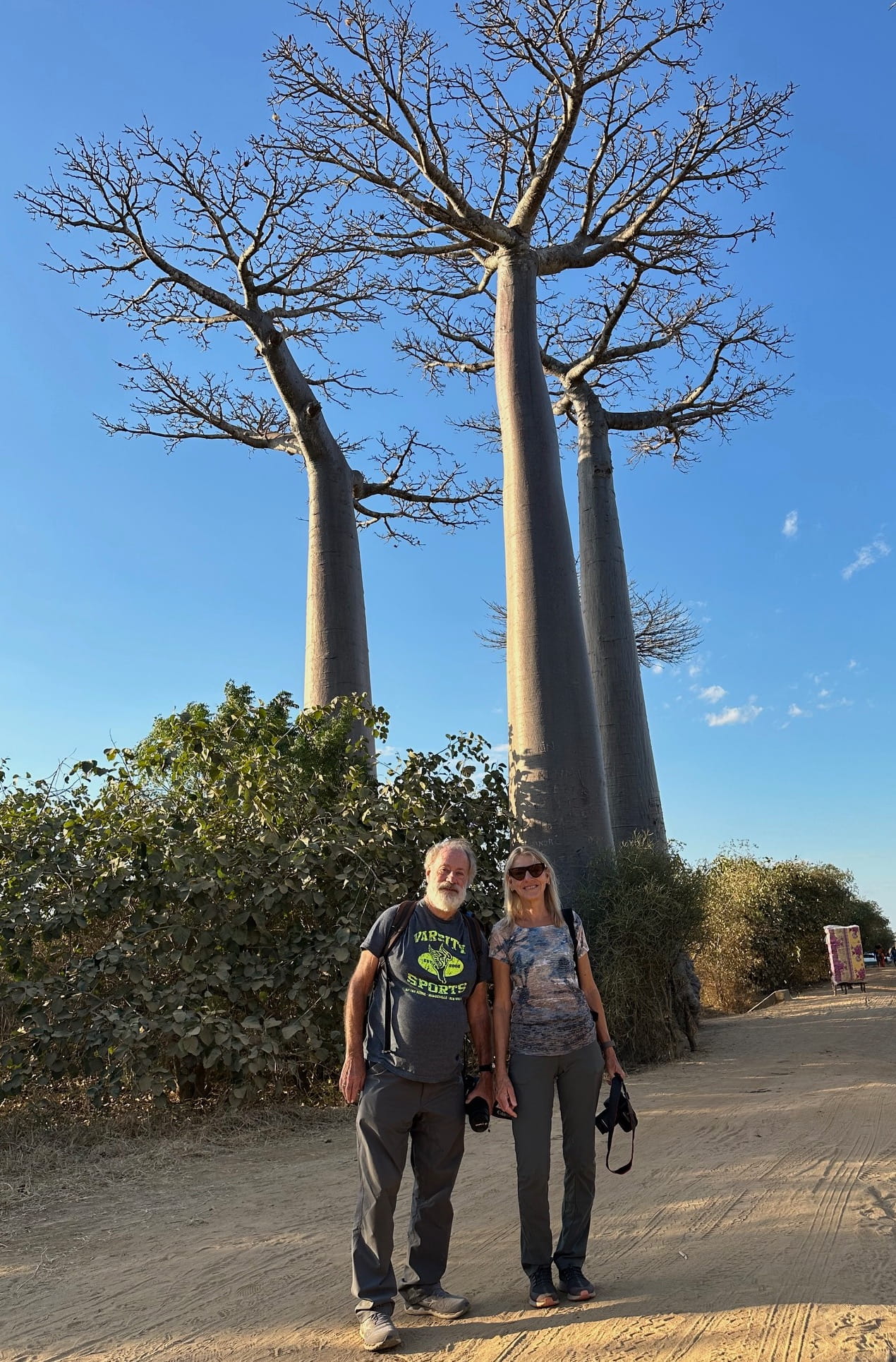
Dr. Henry and Dr. Dutrow at the Avenue of the Baobabs, remnants of a once extensive forest in Madagascar. Most of the avenue is the endangered Grandidier's baobabs (Adansonia grandidieri) — one of six endemic baobab species in Madagascar. Grandidier also has a mineral named in his honor.
TUR2025 builds on a long-running series of Tourmaline Conferences that have shaped modern understanding of one of Earth’s most chemically complex minerals. Research presented at the meeting covered topics ranging from crystal chemistry and thermodynamics to isotopes, textures and tourmaline’s role as an indicator of geologic processes throughout Earth’s history and economic mineralization.
"One of the most exciting things about conferences like this is bringing together scientists from around the world who share a passion for the same mineral," Dutrow said. "When researchers with different perspectives collaborate, it often leads to important scientific advances and new ideas."
Henry said international meetings like TUR2025 help strengthen the broader research community.
"Opportunities like this allow scientists to engage directly with colleagues from different countries and research traditions," he said. "Those interactions deepen collaboration and ultimately move the science forward."
As the international tourmaline community looks ahead to the next conference in 2029, likely to be held in Slovakia, LSU’s continued presence through faculty leaders such as Dutrow and Henry underscores the university’s commitment to international collaboration, field-based science and advancing mineral research worldwide.